Healthcare solutions
One platform, configured to how your facility actually runs
A diagnostic centre and a 200-bed hospital need different things. The modules are the same; which ones you run is not.
By facility type
Polyclinics
Several doctors, one front desk, and a queue that must keep moving.
Registration and UHID, appointments with tokens, consultation and e-prescription, consultation billing, patient portal.
Multi-specialty hospitals
Outpatient and inpatient care running at the same time, with a pharmacy and a lab attached.
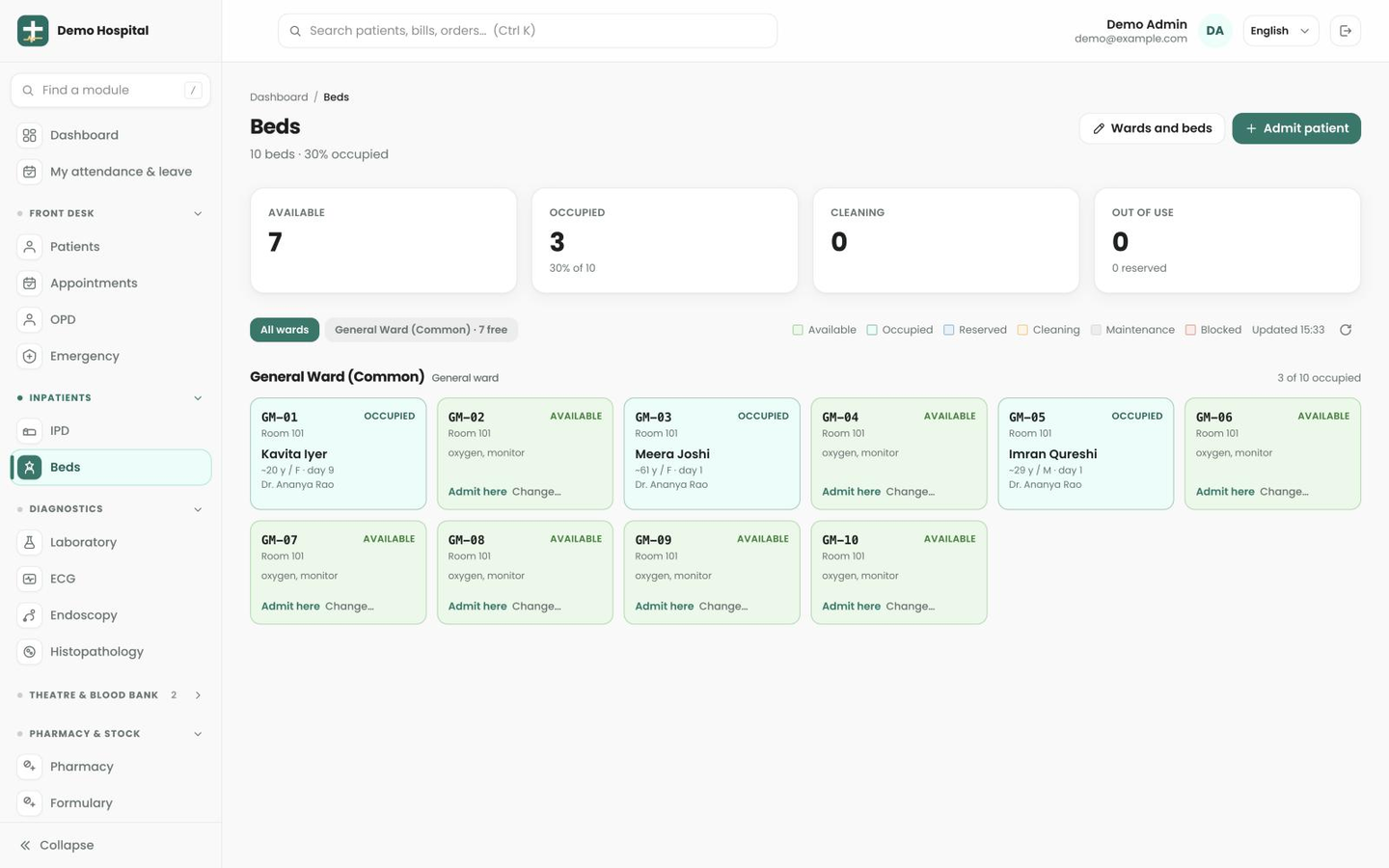
Everything above plus admissions, wards and beds, nursing records, pharmacy dispensing, laboratory, discharge summaries and consolidated billing.
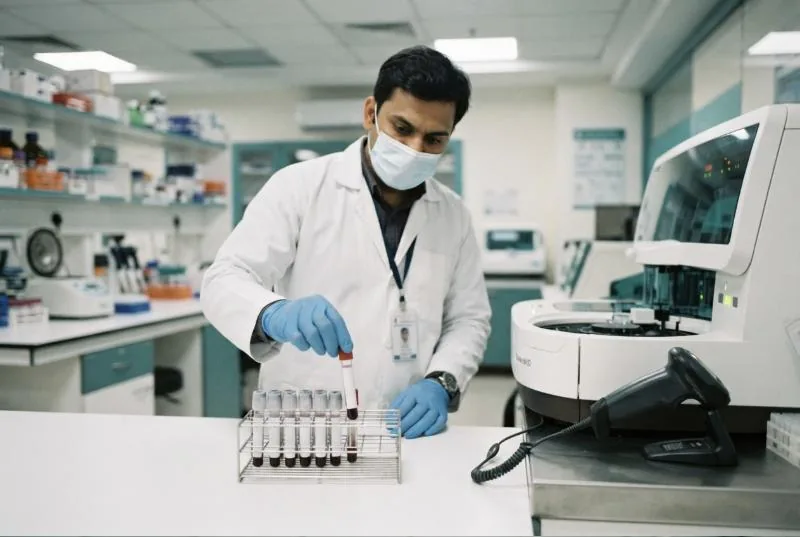
Diagnostic centres and pathology labs
High test volume, strict turnaround, and a report that must not reach a patient before a pathologist signs it.
Test master with age- and sex-aware reference ranges, barcoded samples, result entry separated from approval, PDF reports, portal delivery.
Gastroenterology and endoscopy units
Procedures with consent, sedation, captured images and a biopsy that must stay linked to its report.
Endoscopy and colonoscopy scheduling, pre-procedure checklists, anaesthesia records, image and video capture, biopsy linked through to histopathology.
Hospitals with operation theatres
Theatre scheduling, implants and consumables, and billing that captures all of it.
Theatre scheduling, pre-operative checklist, surgical and post-operative notes, anaesthesia records, consumable and implant tracking, theatre billing.
Hospital groups
Several branches that need their own operations and one consolidated view.
Branch-scoped users, doctors, stock and billing, with organisation-level reporting and optional custom domains.
Coming from an existing system
Most hospitals are not starting from nothing. Patient master data, doctor and service lists, pharmacy items and outstanding balances can be imported, and it is usually better to bring across the master data and open balances than to attempt a full history migration on day one. Tell us what you are running now on the contact page and we will be straight with you about what will and will not transfer cleanly.